Gravel or Brick: Two Different Garden Surfaces
Gravel or brick can set a garden’s visual rhythm: compare their color, texture, edges, and upkeep to choose a surface that suits your home.
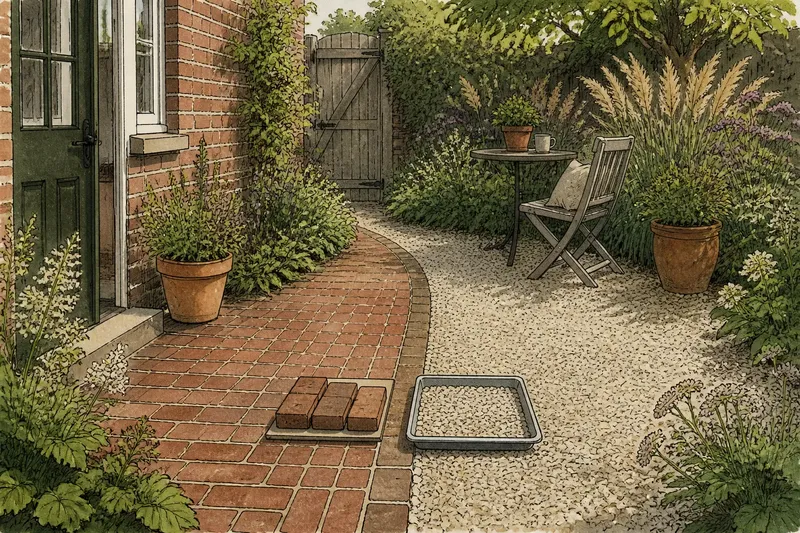
At the back door, a gravel strip catches the light while the brick terrace beside it holds a steady, warm color. Choosing gravel or brick for a garden surface is less about declaring one material better and more about deciding what kind of visual rhythm you want underfoot. A week of looking, sketching, and checking samples can make that choice clearer before you commit.
Start with the garden’s mood
Gravel tends to read as loose and informal. Its small stones create a finely textured field that shifts in tone with the light, and a few visible leaves or footprints usually seem at home there. The surface can make a garden feel relaxed, open, or gently rustic, depending on the stone color and the plants around it.
Brick has a more settled presence. Its repeated units make a visible pattern, even when the bricks vary in color or have worn edges. That order can suit a clipped herb garden, a cottage-style seating area, or a simple rectangle outside a kitchen door.
Look at the house as well as the planting. A pale gravel may echo a light wall or make dark foliage stand out; red or brown brick may pick up tones in a nearby chimney, terracotta pot, or timber fence. The goal is not to match every color, but to notice which surface feels as though it belongs in the same composition.
Gravel or brick in context
Before comparing samples, spend several days noticing where people pause, turn, and carry things. A surface that looks graceful in a drawing may feel fussy beside a frequently used door, while a broad, quiet field can give a busy planting scheme room to breathe.
- First day: Walk the garden at different times and note where the surface will be seen from indoors, where chairs might sit, and which areas connect to a gate or doorway.
- Second day: Write down the mood you want: loose, orderly, old-fashioned, restrained, or something else. Choose a few plain words rather than starting with a product name.
- Third day: Gather samples of gravel and brick in colors that might suit the house and planting. Look at them outdoors, not only in a shop or on a screen.
- Fourth day: Set the samples beside foliage, pots, and the garden wall. View them in sun and shade, and notice whether the material disappears quietly or draws the eye.
- Fifth day: Mark the proposed surface area with a hose, string, or garden stakes. Check how the shape looks from the kitchen window and from the main approach.
- Sixth day: Consider the pattern and edge. Gravel can look crisp when contained; brick can look more relaxed with a less formal bond or a softened border.
- Seventh day: Revisit the samples and make a provisional choice. If you are still unsure, leave both in place for another day and compare them in the garden’s ordinary light.
Say you have a small seating area beside a brick house and a border of airy grasses. You place a shallow tray of pale gravel and a few loose bricks on the ground in the intended shape, then look at both from the back door over several afternoons. If the gravel visually joins the grass border and keeps the seating area quiet, it may fit the desired mood; if the brick makes the space feel more like a room, that stronger sense of enclosure may be the better choice.
Edges and patterns
Gravel depends on a clear boundary. A metal strip, brick edge, stone setts, or a narrow planting band can keep its outline legible beside lawn or a border. Without a defined edge, the visual transition may become soft and casual—which can be pleasant in some gardens, but may look untidy beside a precise layout.
Brick carries its own internal lines. Running courses can lengthen a narrow area, while a herringbone pattern brings more movement and attention. A simple pattern can help the surface support the garden rather than compete with flower colors and foliage shapes.
Think about scale. Small bricks and fine gravel can make a compact space feel detailed; a broad paved area may call for larger, calmer patterns or a gravel grade that does not look visually busy. If the garden already has strong lines from raised beds or a formal hedge, a quieter surface may leave those features room to register.
Comfort and upkeep
The feel of a surface matters in daily use. Gravel has a distinct crunch and a shifting quality, which some people enjoy as a gentle sensory cue and others find inconvenient for wheeled carts or narrow furniture legs. Brick is more stable under a chair or a pot, and its solid pattern can make a seating area feel clearly defined.
Neither material stays visually unchanged. Gravel can collect leaves and plant debris, while weeds may appear where windblown seeds settle. Brick can show moss or soil in its joints, particularly in shaded, damp corners. These changes are not automatically flaws: decide whether you want a surface that looks composed and swept or one that can carry a little patina.
Color affects how visible debris feels. Pale gravel may show dark leaf fragments, while very dark gravel can make pale petals stand out. Brick with varied tones can disguise small marks, though a highly uniform brick surface may make joint lines and stains more noticeable.
Choosing the boundary?
Does gravel make a garden look informal?
Often, but not always. A fine, consistent stone with a crisp edge can feel restrained, while mixed colors and a loose outline tend to look more relaxed.
Does brick suit a small garden?
It can, especially when a straightforward pattern keeps the ground visually calm. The color and scale of the units matter as much as the size of the area.
Can gravel and brick sit together?
Yes, if each has a clear role, such as brick defining a small landing and gravel forming the surrounding ground. A deliberate border between them helps the materials read as a choice rather than an unfinished transition.
Which surface looks more formal?
Brick often reads as more orderly because its units make a repeated pattern. Gravel can also look formal when its color, grade, and boundary are consistent, but its loose texture still gives a softer impression.
Make the choice visible
A sample on a table can mislead because it removes the material from its surroundings. Set samples on the ground where the surface is planned, then view them from the places that matter: the doorway, a favorite chair, and the route through the garden. Notice not just the color, but whether the surface makes nearby plants feel more delicate, more structured, or less distinct.
When the right choice depends on product instructions or local rules, check those before settling the design. Keep the decision focused on the visible role: gravel gives a garden a softer, shifting field, while brick lends it a more patterned and settled base.
For gravel or brick, the most useful final question is how the surface should feel on an ordinary day, with the chairs in use and the plants doing their usual growing. Choose the material whose character still makes sense in that everyday scene, not only in a freshly swept garden.