Why a Garden Path Changes the View
Learn how a garden path shapes the view, guides attention, and reveals planting in sequence while keeping the route clear and comfortable to use.
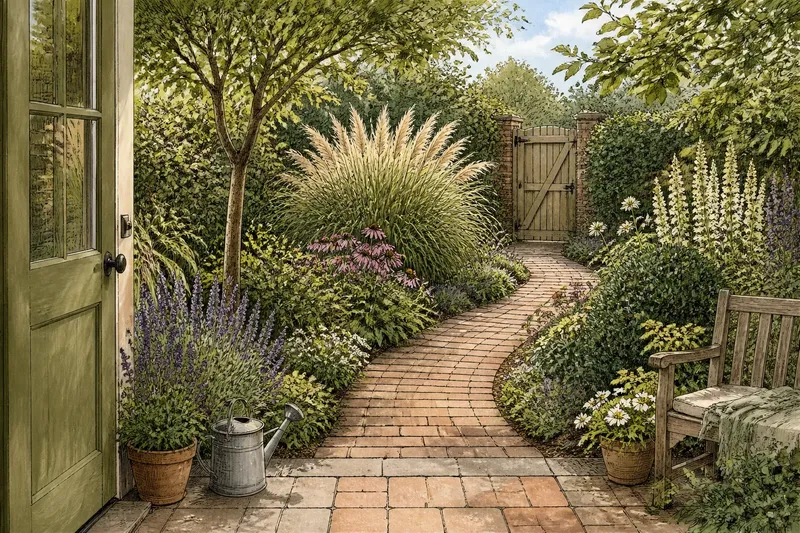
From the kitchen door, a straight brick path can put the back gate in plain sight. A route that bends behind ornamental grass offers a different first view: leaves close by, then the gate. A garden path changes the view through the order in which it reveals a garden, not just through the surface beneath your feet.
Garden Path Views
A path gives the eye a line to follow and suggests a destination. A gate, bench, tree, or opening can make that destination legible; the path’s edges help connect the starting point to it.
A straight route reveals its direction early and can make moving between useful places feel direct. A bend holds back part of the view, so the garden unfolds as someone walks. Neither shape is automatically better. Choose according to what the route needs to connect and what you want people to notice along the way.
Before drawing a curve, name its purpose. It might bring a visitor close to a planting bed, turn attention away from a utility area, or lead toward a place to sit. A curve without a clear continuation can leave people unsure where to go.
Lines and Materials
Path edges steer attention. Repeated flat stones, a line of low plants, or timber edging can draw the gaze forward. If the edges frame a gap in a hedge, that opening may stand out; if a planting bed has stronger color or texture, attention may shift toward it instead.
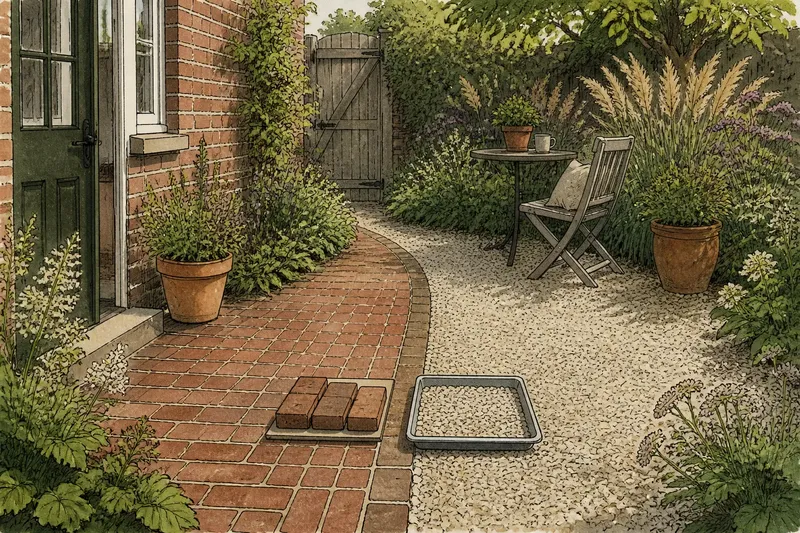
Surface changes can signal a threshold or turn. Consistent brick or gravel reads as a continuous route, while a change in paving can mark the transition between areas. Keep the intended line visible: overhanging plants, containers, or loose edging can make its direction harder to read.
Think about width in relation to the route’s use. A path to a shed needs to work for the person carrying tools; one beside a seating area should leave a comfortable way to approach and pass. Consider how the chosen material feels underfoot and how it fits the garden’s maintenance needs. For installation details, follow product instructions and seek qualified help where the work involves a safety concern or complex construction.
What Does a Path Reveal?
Does a straight path make a garden feel smaller?
A straight path can make the full distance easier to see because its far end is visible. How spacious the garden feels also depends on the boundary, surrounding planting, and what sits beside the route.
What does a curved path do?
A curve delays part of the view and can bring visitors closer to nearby plants. Make the continuation clear with a visible section of paving, a consistent edge, or a destination that gives the route purpose.
Where should a garden path lead?
Connect it to a place people have a reason to reach, such as a gate, seating area, water source, or work space. It can also lead toward a view, provided the ending looks intentional rather than abruptly unfinished.
How can I tell what visitors will notice?
Stand at the entrance and walk at an ordinary pace, pausing at each turn. Notice what catches your eye, what remains hidden, and whether the destination is clear; those observations can suggest where a small change to the path or planting might help.
Plan the View Sequence
A satisfying route can offer an approach, a transition, and a view that comes into focus later. A fragrant herb bed might come first, followed by a quiet seat; a screen of foliage might make a sunlit opening more noticeable when the visitor reaches the turn.
Say you have a small garden where the patio, back gate, and a clump of ornamental grass are visible from the kitchen door. You want visitors to notice the grass before the gate. First, lay a garden hose along a possible path that passes near the grass and then curves toward the gate. Next, walk that line from the patio and check whether the grass comes into view before the gate; then approach from the side entrance to see whether the route still reads clearly. If the grass appears first and the gate remains easy to find, the layout creates the intended sequence; if the gate disappears or the turn feels unclear, shift the hose until the route offers a visible clue. This invented layout changes the order of views, but it does not establish that the garden will feel larger or more surprising.
Look at the route from ordinary walking height, not only from a window above. A plan can seem balanced while a visitor on the path sees bins or equipment straight ahead. A suitable screen may redirect attention, but leave the route itself unobstructed.
Planting Along Paths
Low, open plants let the eye travel across a border. Taller foliage can make a passage feel more sheltered, while a gap in the planting can frame a view. Fine leaves and broad leaves create different visual textures; repeating a plant can emphasize the path’s direction, while a mixed edge encourages closer attention to individual plants.
Plants change as they grow through the season, so consider their mature spread and the space needed for routine care. Check plant labels for growing guidance, and keep foliage from covering the route or obscuring a turn. If a path meets a shared boundary or public access, check the relevant local rules before making changes.
A border does not need to be empty to keep a path legible. An open section can provide a long view, while a fuller section offers nearby details. Keep enough visual cues between them that visitors can follow the route.
Check the Walking View
Before committing to a new line, mark it with a garden hose or temporary stakes. Walk from each entrance, carrying an ordinary item such as a watering can if the route will serve garden work. Watch whether the destination is visible, whether the turn makes sense, and whether the path passes near the feature you want people to notice.
- Observe whether the destination is visible from the entrance; if it is, keep the line, then consider whether a more direct route serves the same purpose.
- Observe whether a bend hides the continuation; if it does, adjust the curve or add a visible clue, but keep the planting if the route remains easy to follow.
- Observe whether the route passes close to the feature you want noticed; if it does not, shift the marked line, or keep it and make the feature more visible from the existing path.
- Observe whether an overhanging plant or container intrudes on the walking line; if it does, move or prune it where suitable, or revise the route if the obstruction cannot be cleared.
- Observe whether the path works from both entrances; if one approach feels unclear, add a directional cue or change the alignment, while retaining the clear approach.
- Observe whether a seat, gate, or work area feels like the route’s intended destination; if it does, keep its position, and if it does not, adjust the path’s ending or the destination’s orientation.
Pay attention to the last few steps as well as the first. A bench directly in line with the route may read as its destination; a seat set to one side can invite a turn and a view back across the garden.
When reviewing a garden path and view, follow what becomes visible from the entrance, along the edges, at each turn, and at the destination. Keep practical access clear, and use the walk itself to shape which garden details arrive first.